

Flexible packaging is designed to protect products, support efficient production, and create a strong visual presence on the shelf. While film strength is an important part of packaging design, high-performing flexible packaging requires much more than simply selecting a thicker or stronger film. Durability, structure, appearance, sealability, and converting performance all influence how a package performs throughout its lifecycle.
Strength Alone Doesn’t Solve Every Packaging Challenge
A strong film may resist punctures or tearing, but packaging performance involves more than isolated material strength. Flexible packaging must withstand filling, sealing, transport, handling, and retail display without losing integrity or appearance. In many applications, a package also needs to maintain flexibility, dimensional stability, print quality, or airflow depending on the product inside.
The Importance of Material Structure
Material structure plays a major role in overall package performance. Multi-layer laminates allow manufacturers to combine materials with different characteristics into a single engineered solution. One layer may provide barrier properties, another may improve sealability, while reinforcement layers help improve strength and dimensional stability. This layered approach allows packaging to be optimized for specific applications rather than relying on a single material to do everything.
Why Reinforcement Matters
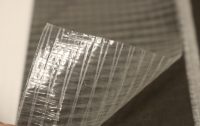
In demanding applications, reinforcement structures help improve durability without adding excessive weight or thickness. Reinforced composite materials distribute stress across the laminate, reducing the risk of tearing or distortion during use and converting. Engineered reinforcement materials such as CLAF® can be integrated into flexible packaging structures to improve stability and strength while maintaining process efficiency.
Appearance and Shelf Appeal Still Matter
Performance is only part of the equation. Packaging is also a branding tool. Surface texture, printability, and visual presentation all influence how consumers perceive a product. Materials that provide a refined surface appearance can help elevate packaging quality while still supporting functional performance. Fine-denier nonwoven materials such as Milife® offer opportunities to create flexible packaging structures that combine visual appeal with lightweight durability.
Converting Compatibility Is Critical
Flexible packaging materials must also perform efficiently during lamination, printing, slitting, and pouch converting. Materials that stretch unpredictably, curl, or create inconsistent tension can reduce production efficiency and impact finished package quality. Engineered composites are often designed not only for end-use performance, but also for reliable runnability in high-speed converting environments.
Tailoring Materials to the Application
Different products require different packaging characteristics. Fresh products may benefit from breathable structures, while industrial or retail applications may prioritize reinforcement, appearance, or puncture resistance. Custom composite packaging allows manufacturers to tailor structures around specific performance requirements by combining films, nonwovens, reinforcement layers, and specialty materials into a single laminate.
A More Complete Approach to Flexible Packaging
Modern flexible packaging is no longer built around a single material property. High-performance structures balance strength, durability, aesthetics, processability, and functionality together within one engineered system. By focusing on the total structure instead of film strength alone, manufacturers can develop packaging solutions that perform more reliably from production through end use.
At ANCI, engineered materials and custom composite structures are developed to help converters and manufacturers build packaging solutions designed around real-world performance requirements.